MBA Alternatives With High Salary: Practical Paths to Executive-Level Pay Without Business School
Many professionals delay career decisions because an MBA feels like the only path to higher income. Tuition costs keep rising, opportunity costs add pressure, and outcomes vary widely. That is why mba alternatives with high salary have become a serious topic for people who want strong earnings without spending years in business school. In the first few years after graduation, an MBA can cost six figures when you add tuition, fees, and lost income. For many careers, there are faster and more targeted options.
This article explains realistic, high-paying alternatives to an MBA. You will learn what they are, how they compare, what they cost, and the risks involved. Here’s where most people get confused: high salary does not always require a general management degree. Often, specialised skills create more value—and better pay.
What People Really Mean by “MBA Alternatives With High Salary”
An MBA teaches broad business management skills: finance, strategy, operations, and leadership. Employers value it, but they often pay more for scarce, job-ready expertise.
When people search for mba alternatives with high salary, they usually want one or more of the following:
-
Faster return on investment
-
Lower education costs
-
Direct access to high-paying roles
-
Flexibility to work across industries
-
Less time away from the workforce
This detail often gets overlooked: many high-paying roles reward depth, not breadth. Employers pay premiums for people who solve specific problems.
Why an MBA Is Not Always the Best Financial Decision
Before exploring alternatives, it helps to understand the trade-offs.
Cost of an MBA
-
Tuition can exceed £50,000–£100,000 depending on country and school
-
Living expenses and materials add more
-
Lost income during study can double the real cost
According to data from major universities, many graduates need several years to break even financially.
Salary Reality
While top-tier MBA graduates can earn high salaries, outcomes vary by:
-
School reputation
-
Industry placement
-
Economic conditions
The U.S. Bureau of Labor Statistics shows that specialised technical and professional roles often match or exceed MBA-level earnings without requiring a business degree (source: https://www.bls.gov).
MBA Alternatives With High Salary Based on Specialised Skills
Professional Certifications That Rival MBA Pay
Chartered Financial Analyst (CFA)
The CFA designation focuses on investment management, portfolio strategy, and financial analysis.
Why it pays well:
-
Recognised globally
-
Directly linked to asset management and finance roles
Requirements:
-
Three exams
-
Several years of relevant work experience
Costs:
-
Exam and registration fees are far lower than an MBA
Risks:
-
High exam difficulty
-
Long completion timeline
The CFA Institute provides detailed program requirements (https://www.cfainstitute.org).
Certified Public Accountant (CPA) or ACCA
Accounting credentials lead to senior roles in finance, audit, and corporate leadership.
Comparison to an MBA:
-
More technical
-
Less general management
Salary outlook:
Senior accountants and finance controllers often earn executive-level pay.
Key factor: Geographic recognition matters. Always check local regulatory bodies.
Technology-Focused MBA Alternatives With High Salary
Software Engineering and Computer Science Degrees
Advanced technical roles often out-earn general managers.
Why salaries are high:
-
High demand
-
Skills shortage
Common roles:
-
Software engineer
-
Solutions architect
-
Technical product lead
The UK government’s Digital Strategy highlights sustained demand for advanced tech skills (https://www.gov.uk/government/collections/uk-digital-strategy).
Data Science and Analytics Programs
Data-driven decision-making has reshaped business.
Here’s where most people get confused:
Data science is not just statistics. It blends programming, business logic, and modelling.
Requirements:
-
Strong analytical skills
-
Programming knowledge
Costs:
-
Certificates and degrees vary widely
-
Often cheaper than an MBA
Risk:
Rapid tool changes require continuous learning.
Law and Legal Pathways as MBA Alternatives
Law Degree (JD or LLB)
Law degrees open doors beyond legal practice.
High-paying outcomes include:
-
Corporate counsel
-
Compliance leadership
-
Regulatory advisory
According to the UK government’s legal profession overview, legal expertise is central to finance, energy, and technology sectors (https://www.gov.uk/government/publications).
Trade-off:
-
Intensive education
-
Long qualification timelines
Healthcare and Life Sciences Careers With MBA-Level Pay
Medical and Clinical Leadership Roles
Healthcare rewards both technical skill and responsibility.
Examples:
-
Physicians
-
Specialist clinicians
-
Health system directors
What happens next depends on one key factor:
Licensing requirements vary significantly by country.
For verified standards, consult the NHS careers framework (https://www.healthcareers.nhs.uk).
Health Informatics and Healthcare Analytics
This hybrid field combines data, systems, and healthcare knowledge.
Why it pays:
-
Direct impact on patient outcomes
-
High regulatory responsibility
Project and Operations Management Without an MBA
Project Management Professional (PMP)
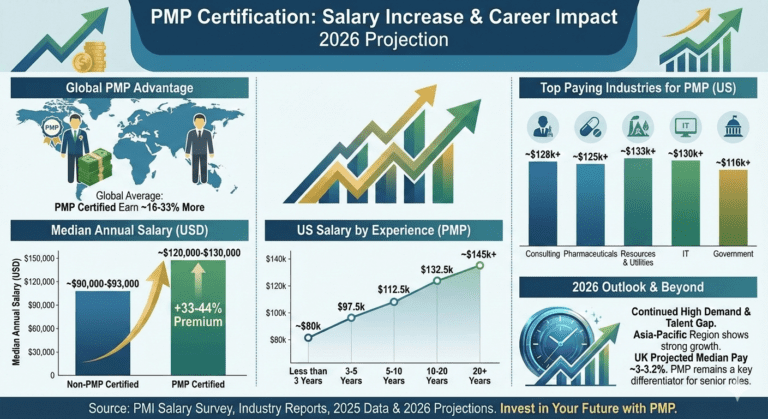
PMP certification focuses on execution, not theory.
Comparison with an MBA:
-
Shorter training
-
Practical skill validation
Industries that pay well:
-
Construction
-
Energy
-
Technology
The Project Management Institute outlines credential standards (https://www.pmi.org).
Supply Chain and Operations Specialisation
Global supply chains have become complex and risk-heavy.
High-paying roles include:
-
Operations director
-
Supply chain strategist
Specialised master’s degrees or certifications often outperform general MBAs in this space.
Consulting and Strategy Without an MBA
Industry-Specific Consulting
Consultants with deep expertise often earn more than generalist MBAs.
Examples:
-
IT security consulting
-
Healthcare operations consulting
-
Energy market advisory
Risk:
Income can fluctuate with market demand.
Comparing MBA Alternatives With High Salary
Time Investment
-
MBA: 1–2 years full-time
-
Certifications: months to several years (flexible)
Cost
-
MBA: High upfront and opportunity cost
-
Alternatives: Modular and lower risk
Career Flexibility
-
MBA: Broad
-
Alternatives: Deep but transferable
This detail often gets overlooked: many employers value demonstrated results more than degrees.
Hidden Risks of Skipping an MBA
Not choosing an MBA is not risk-free.
Potential Risks
-
Narrow career path if skills become obsolete
-
Slower access to executive networks
-
Limited exposure to general management theory
Mitigation Strategies
-
Continuous learning
-
Cross-functional projects
-
Leadership development programs
When an MBA Still Makes Sense
An MBA may still be the right choice if:
-
You aim for top-tier consulting or investment banking
-
You need structured leadership training
-
Your employer sponsors the degree
Understanding this context helps you evaluate mba alternatives with high salary more realistically.
FAQs About MBA Alternatives With High Salary
1. Can certifications really replace an MBA?
Certifications cannot replace an MBA in every role, but in specialised fields, they often lead to equal or higher pay.
2. Which MBA alternative pays the most?
Pay depends on industry and location. Technology, finance, and healthcare roles often top salary charts.
3. Are these alternatives recognised globally?
Some are global, like CFA and PMP. Others are country-specific. Always verify recognition.
4. Do employers prefer experience over degrees?
Many employers prioritise proven skills and results, especially in technical fields.
5. Is switching careers without an MBA risky?
It can be. Risks reduce when you choose fields with skill shortages and clear credential pathways.
6. How long does it take to see salary growth?
Some roles show faster returns than an MBA, especially certifications tied to in-demand skills.
Conclusion: Choosing the Right Path Beyond an MBA
MBA alternatives with high salary exist because modern economies reward expertise, not just credentials. For many professionals, specialised education offers a faster, cheaper, and more direct route to strong earnings. The key is alignment—between your skills, market demand, and long-term goals.
Before deciding, compare costs, timelines, risks, and flexibility. High pay is achievable without business school, but only when the path fits both your abilities and the market reality.